How Does a Drone Fly?
During my reserve duty up north, I was surprised to discover that a lot of people don’t understand the principles behind how a drone flies — even people who are experienced at flying them.
If you’ve ever wondered how this strange-looking aircraft actually manages to fly, this post is for you.
Lift without spin
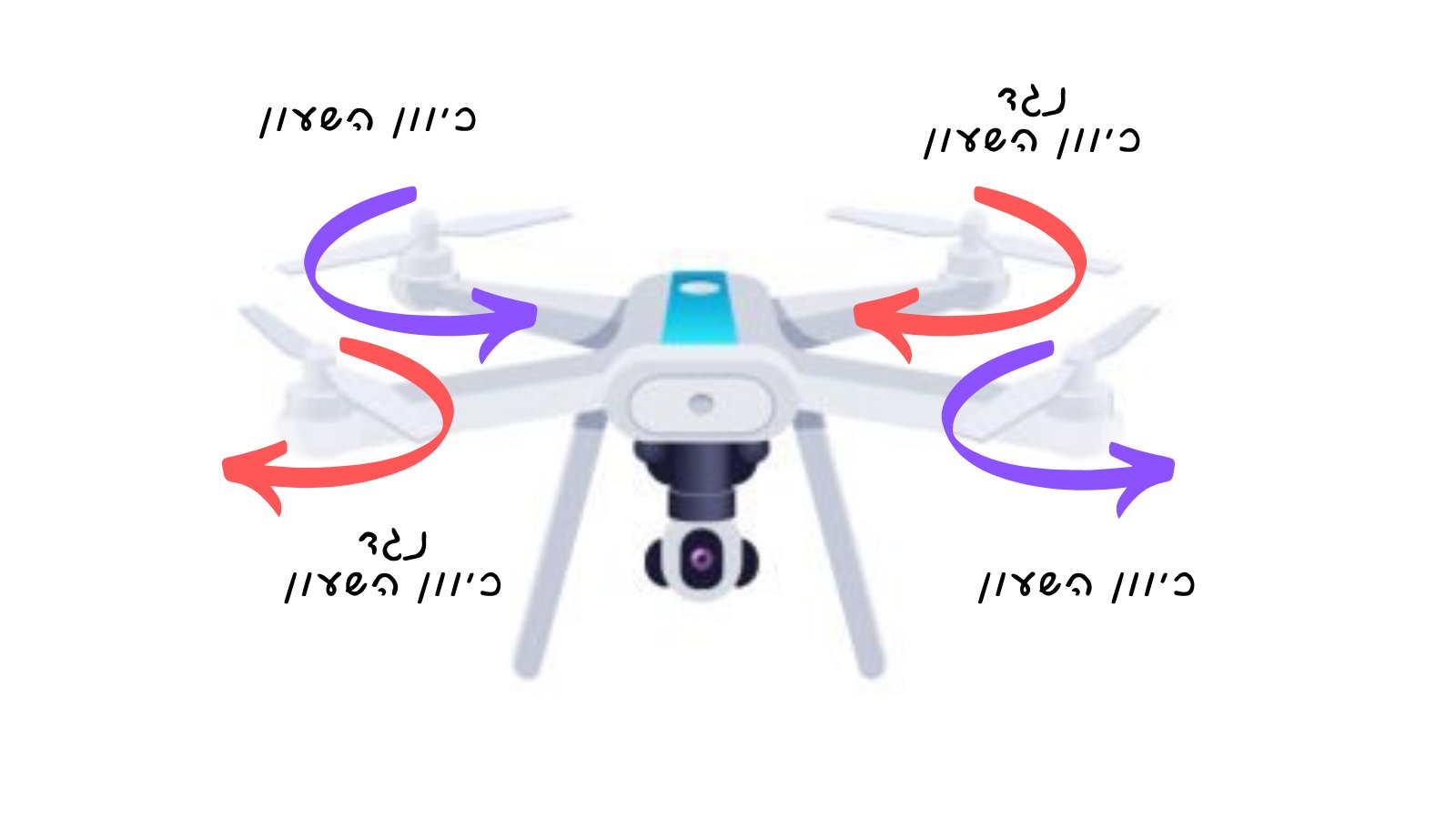
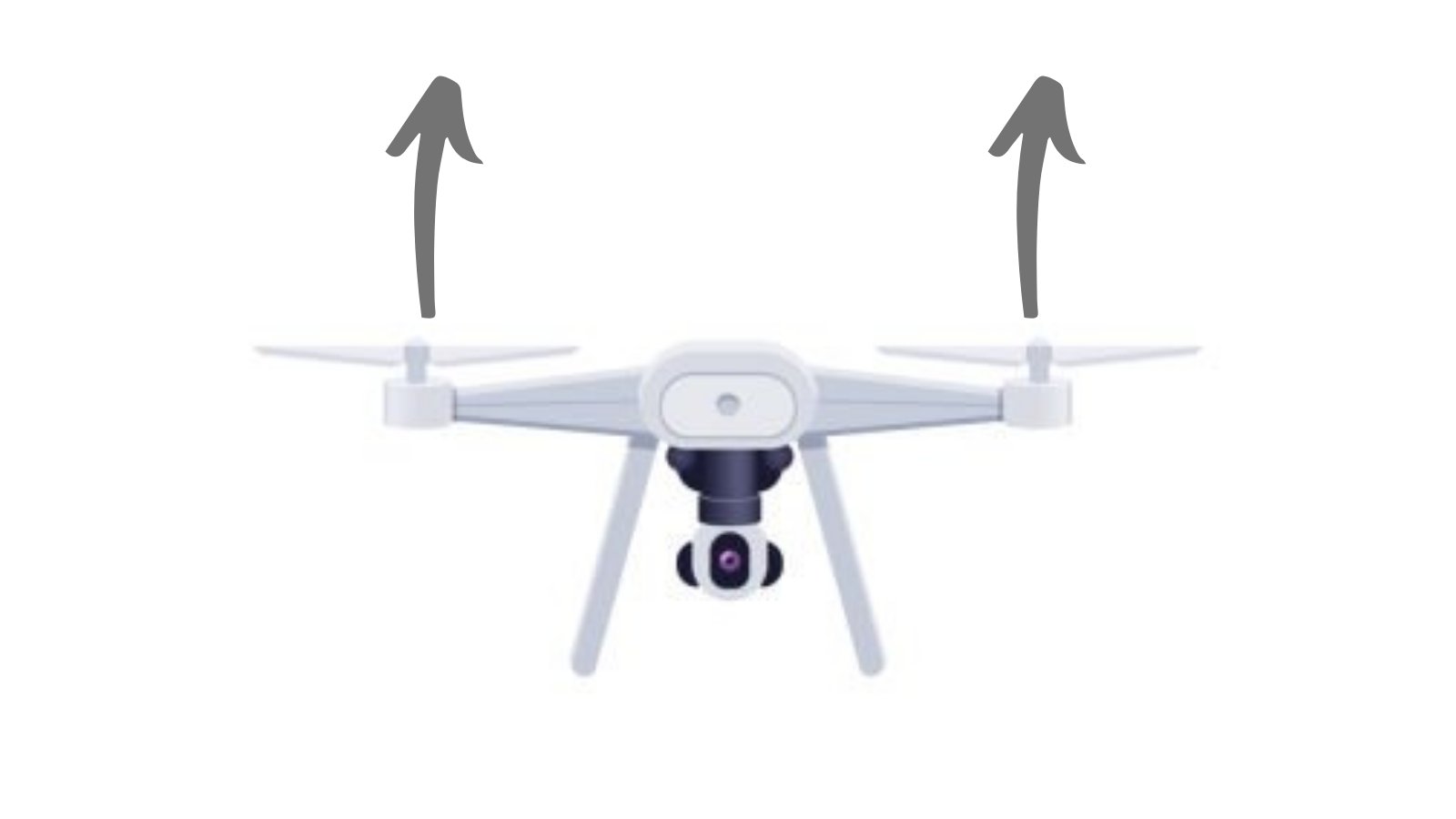
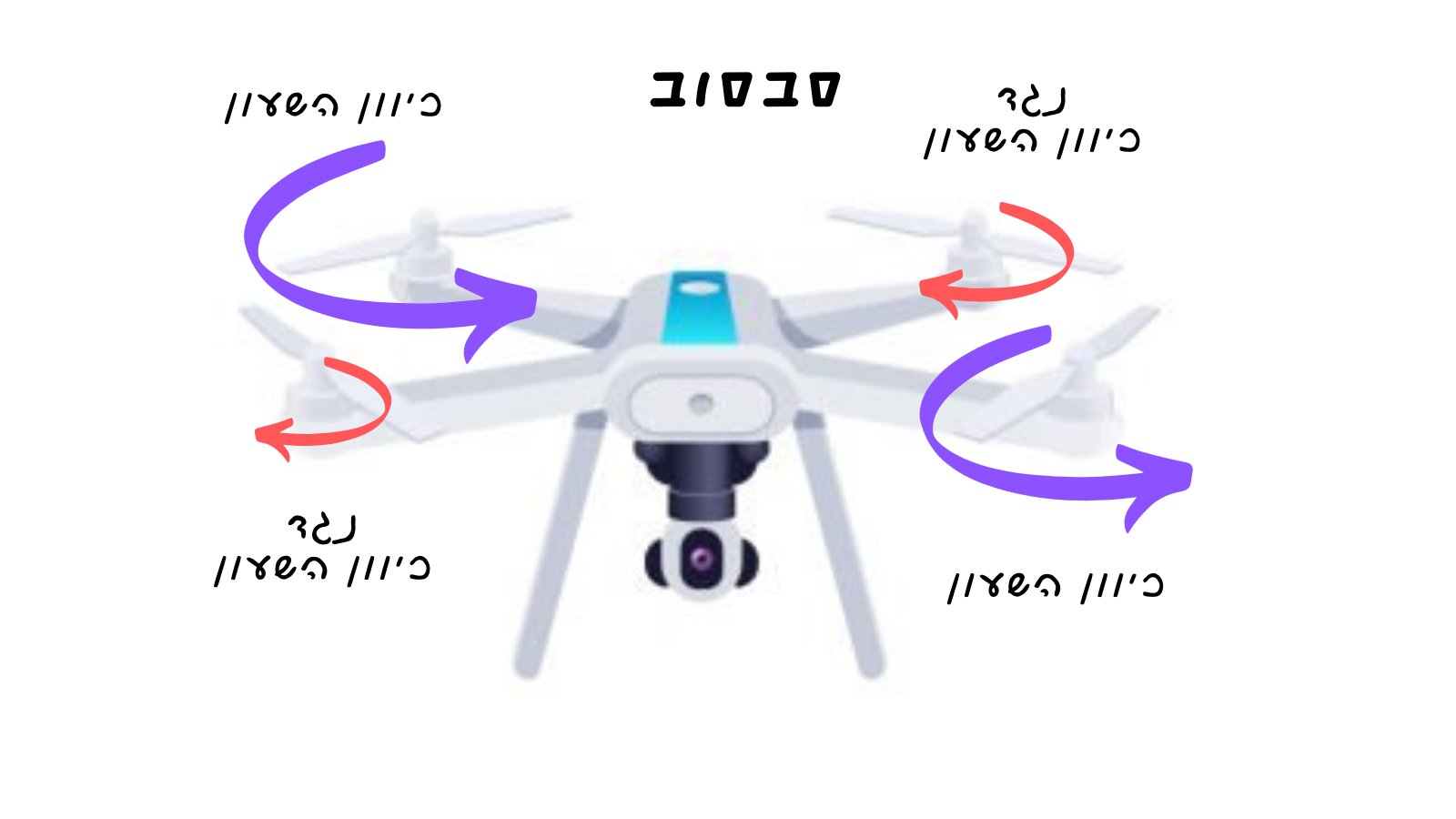
If we look at the image below, each pair of adjacent rotors spins in the opposite direction to the other, so each one cancels out the rotation that the other creates. That gives you two pairs of rotors producing lift without making the drone spin.
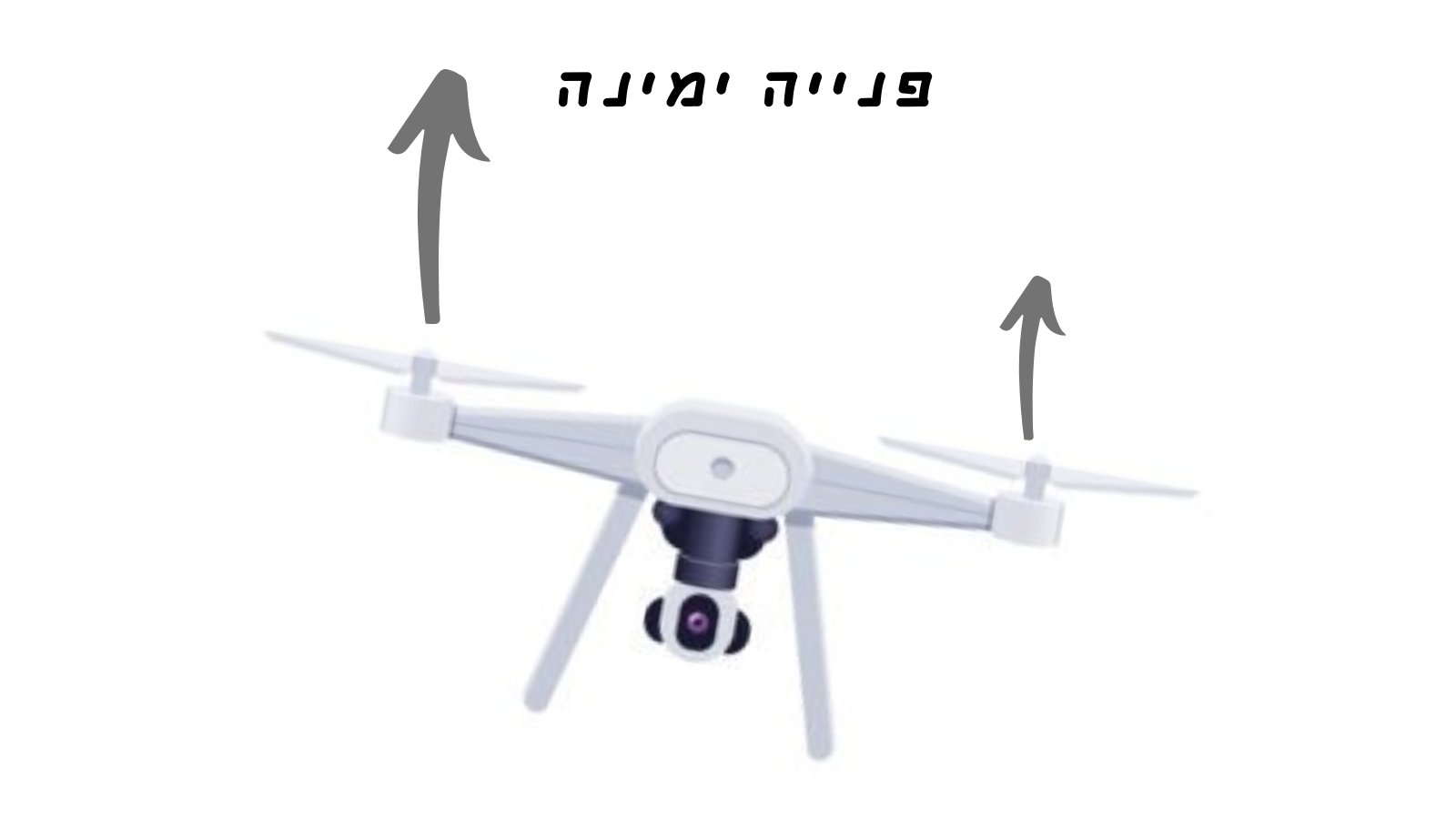
Rolling sideways
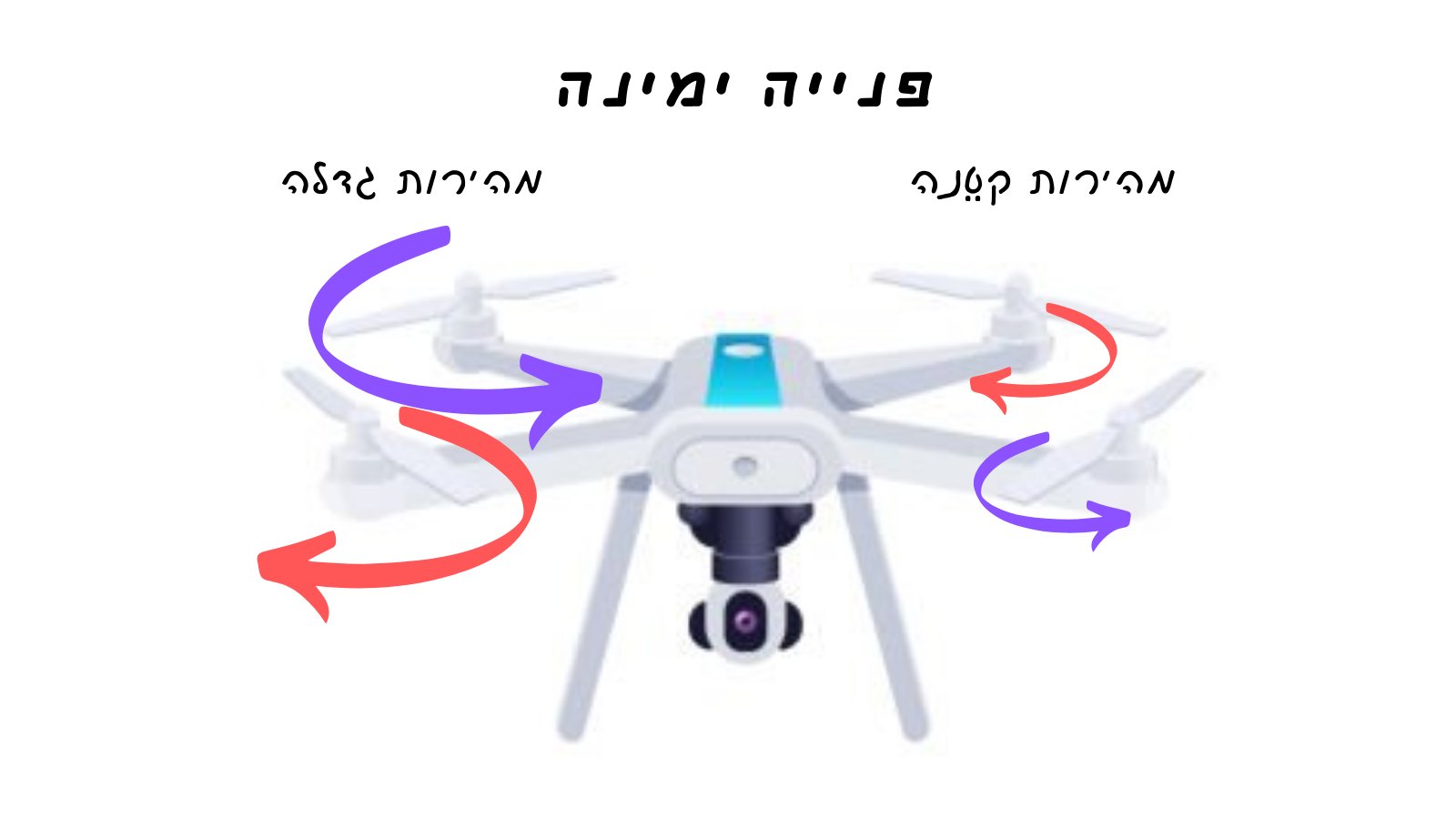
To roll to the right, the drone slows down the spin rate of the two rotors on the right side relative to the rotors on the left. Because the rotors spin in opposing directions, this doesn’t make the drone spin — it only reduces the lift produced on the right side, so the left side rises and the right side drops.
Tilting forward
In the same way, to tilt itself forward the drone slightly slows down the spin rate of the two front rotors relative to the rear rotors.
Yawing in place
And what about yaw — rotating in place? Here the drone takes advantage of the very phenomenon we started with: the spin.
To yaw counter-clockwise, the drone slightly slows down the rotors that spin counter-clockwise. This way, the rotors spinning clockwise rotate the drone counter-clockwise more strongly than the counter-clockwise rotors push the drone clockwise.
Why this matters
The beauty of drone technology is that it’s very simple — apart from the spinning rotors, there are no moving parts at all. That makes drones very simple, cheap, and reliable.
That’s it. That’s the simple explanation of how drones fly.
In upcoming posts I’ll write about why drones can’t stay in the air for hours, the technological revolutions that made building drones possible, the challenges that still exist in integrating drones into the modern battlefield, and why some drones have wings.

Next in this series: Why Can’t Drones Fly for More Than 40 Minutes? (Part 1).
This post is a translation of a thread I originally posted on X.